Best Practices
Context of the practice
Cataract is one of the most common causes of painless progressive loss of vision in the elderly population. Decrease in vision due to cataract not only interferes with daily activities of the people, but also hampers their economic, social and emotional wellbeing. Cataract if left untreated can also result in significant complications leading to irreversible blindness. Hence tackling this at an early stage will not affect the quality of life of an individual. Community screening camps have been undertaken at various places from the Department of Ophthalmology in order to screen people for cataract, recognize and operate to reduce the burden of blindness according to various national programs.
Objectives of Practice
- To reduce the incidence of preventable and treatable blindness due to cataract by prompt screening
- To enable the postgraduates and residents get trained about the disease condition, its predisposing factors, screening procedure and treatment outcomes
- To empower the optometry students on organizing and taking an active part in outreach programs for cataract screening
The Practice
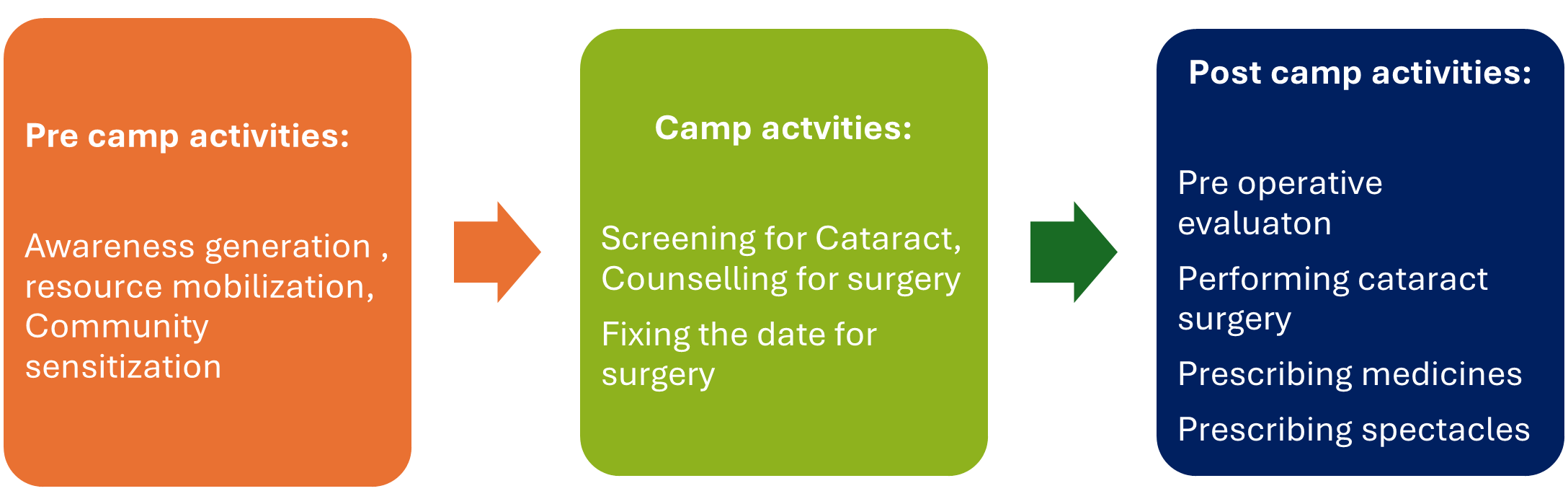
Cataract outreach screening camps have been undertaken regularly by the department of Ophthalmology. Around 6 to 8 camps are being conducted in a month at different places and Patients are screened. They are brought to the JSS Hospital, Mysuru and a detailed preoperative evaluation is done before they are subjected to cataract surgery. Post operative care including medications, protective glasses and appropriate counseling is done in order to achieve a good visual outcome. Patients are also counselled about home care including hygiene and encouraged to visit the JSS Hospital hospital if any need arises.
Obstacles faced and strategies adopted to overcome them
Obstacles - Systemic fitness for cataract surgery especially in geriatric age group is of concern
Strategy - AProper systemic evaluation of patient is of prime concern. Hence thorough examination and physician consultation is taken as and when required without jeopardizing the health of the patient who is planned for cataract surgery
Impact of the Practice
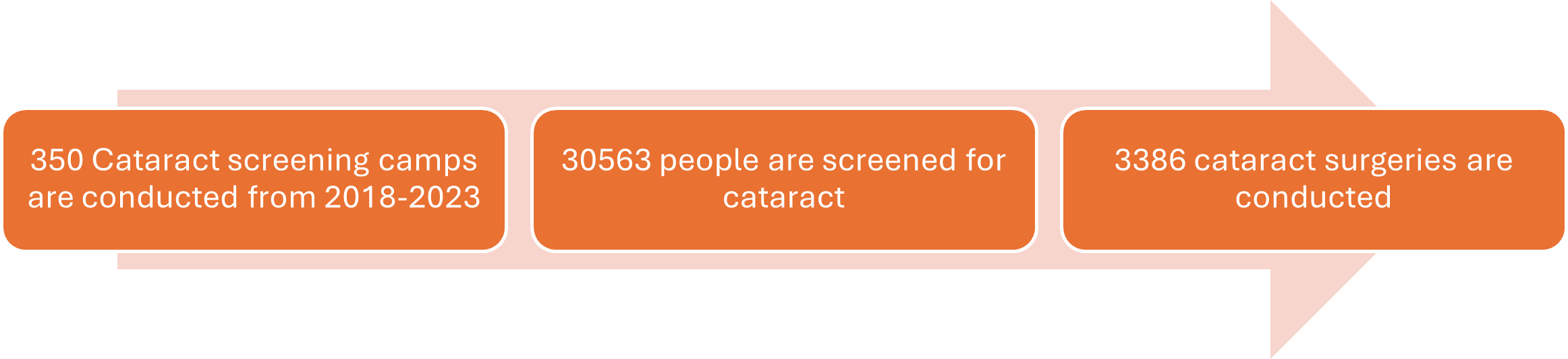
Prompt, regular cataract screening and surgery for those patients has resulted in reducing the burden of treatable blindness to a large extent in our catchment areas. Also need based post operative care and spectacle rehabilitation has improved the quality of life of such patients to a large extent. This has resulted in trying to meet the goals of national programs which target preventable treatable blindness like cataracts.
Post graduate students have got adequate exposure to the skills of cataract screening and surgeries with the success rate of near 100%. Optometry students in their feedback expressed that the camps provide them a great opportunity to develop interpersonal relationship, communication and leadership skills.
One publication in Web of science and scopus indexed journal Jasly K, Goyal S, Ashwini PK, Kanthraj GR, Chethana SG, Ranugha S. Three-part scoring system (tripartite) for teledermatology versus International Contact Dermatitis Research Group criteria to interpret patch test readings: A comparative observational study. Indian J Dermatol Venereol Leprol. doi: 10.25259/IJDVL_118_2023
Resources required
Pamphlets, publicity in the places where camp is planned, vehicle, optometry and postgraduates, faculty of ophthalmology department, equipment like vision charts, torch, Ophthalmoscopes
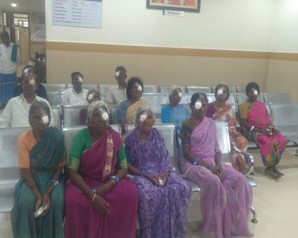
Beneficiaries of cataract screening camp after cataract surgery at JSS Hospital, Mysuru
Context of the practice
Retinal diseases is one of the most important causes of painless progressive or sudden loss of vision as for as posterior segment pathology is concerned. They could involve peripheral retina, it's vasculature and most commonly Macula. Disorders affecting macular can manifest early as diminution of vision which if left untreated can progress steadily .
Diseases like diabetic retinopathy, vascular occlusion, ARMD and inflammatory retinitis almost always involve Macula restoring in significant central visual loss. Early diagnosis and treatment will not only reverse some visual loss but also improve the quality of life of the patient
Anti VEGF injections have revolutionized the treatment of many macular diseases restoring in good visual outcome and quality of life in such Patients
In this context Department of ophthalmology has been providing Anti VEGF injections to all types of macular involvement. Diabetic macular edema , Macular edema due to vein occlusion, neovascular AMD to name a few. Agents used are internationally recognised, FDA approved drugs like Ranibizumab, Brolucizumab and Aflibercept. These have been widely used in the treatment.
Anti VEGF injections are being given with utmost care and under aseptic precautions. Patients are promptly followed up regarding the efficacy and safety of drugs , macular morphology monitoring done using Optical coherence tomography.
Post graduate students are also well aware of Anti VEGF injections and are being trained to administer the same
Objectives of Practice
- To reduce the incidence of preventable and treatable blindness due to macular edema by early diagnosis and intervention with Anti VEGF injections
- To enable the postgraduates and residents get trained about the macular diseases, it's predisposing factors, investigating and treatment outcomes
- To train the post graduate students and senior resident GTS in the technique of intravitreal Anti VEGF injections
The Practice
Intravitreal Anti VEGF injections have been undertaken regularly by the department of Ophthalmology
Step 1: Patients having various macular disorders undergo detailed ophthalmic evaluation including visual acuity testing, slit lamp examination, IOP measurement, dilated fundus exam, Fundus photography for documentation and for serial follow up. They undergo optical coherence tomography (macular program) for the accurate diagnosis
Step 2: After explaining to the patients about the need for anti VEGF injections if any required, they are referred to physicians for fitness before the procedure.
Care is taken to know if there is any history of stroke or any cardiac event in the recent past which can be a relative contraindication.
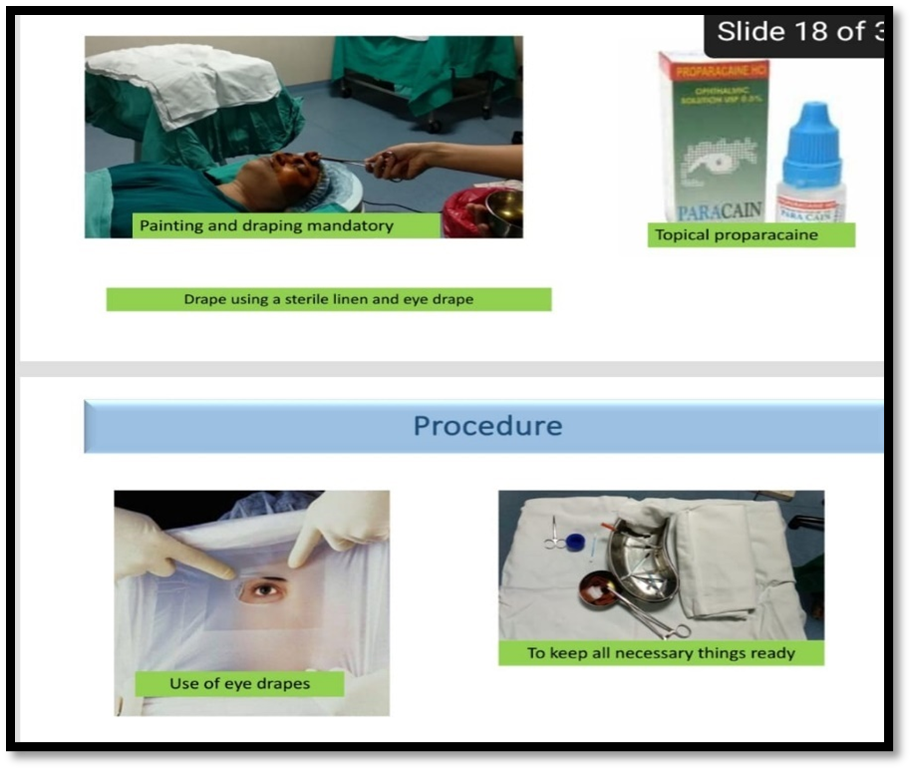
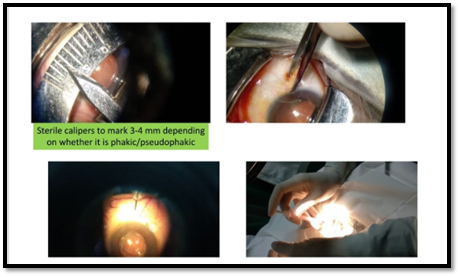
Step 3: On the designated day, the patient is subjected to injections in the operation theatre with all aseptic precautions. The patient is seen after 2-3 hrs and then discharged after adequate post operative instructions.
Step 4: They are then regularly followed up at the OPD.
Obstacles faced and strategies adopted to overcome them
Obstacle
Recurring and substantial costs for the injections is of concern. Systemic fitness for the injections is also of importance, specially in geriatric age group
Strategies to overcome
- Proper systemic evaluation of patient is of prime concern. Hence thorough examination and physician consultation is taken as and when required without jeopardizing the health of the patient who is planned for injections.
- Meticulous aseptic precautions are taken to prevent post operative infections
- Various schemes are in place which would financially assist our patients
Impact of the Practice
Early diagnosis and treatment of macular diseases with intravitreal Anti VEGF injections have revolutionized the management of many retinal pathologies.
Over last five years 2250 patients with various macular diseases have been treated with Anti VEGF injections at Department of Ophthalmology, JSS Medical College and Hospital, Mysuru. More than 50% patients who underwent this treatment have reported improvement in their visual acuity on subsequent follow up visits. Majority of these patients have opined that the injection has helped them to perform their day to day activities and improved their quality of living on qualitative enquiries during follow up visits
Inclusion of Anti VEGF injections under many insurance and health schemes have made it affordable to the people to a large extent.
Resources required
Patient education material, OCT, trained faculty for injections , OT set up with instruments
Context of the practice
Knowledge of temporal bone anatomy is crucial for mastering ear surgeries. Training postgraduates (PGs) and junior faculty in this area enhance their surgical skills, particularly in otolaryngology. The department has been conducting hands-on temporal bone dissection courses annually since 2018 to address this need. Young ENT surgeons and post graduate students from different parts of the country participate in this structured training program.
Objectives of Practice
- To reduce the incidence of preventable and treatable blindness due to macular edema by early diagnosis and intervention with Anti VEGF injections
- To train PGs and junior faculty in ear surgeries through practical, hands-on experience with temporal bone dissection techniques
- To provide timely feedback on the temporal bone dissection technique to the participants to enhance their skills
The Practice
The Department of ENT organizes annual temporal bone dissection courses in collaboration with the Department of Anatomy, JSS Medical Colleges where participants get hands-on experience of temporal bone dissection with cadaveric temporal bones. These courses are designed to improve surgical skills by providing practical knowledge of temporal bone anatomy.
Each dissection station is equipped with a microscope, external camera with a display monitor, wet temporal bones, drilling burrs, suction machine, and micro instruments.
Step 1:The facilitators from the Department of ENT demonstrate the temporal bone dissection technique in a systematic and stepwise manner.
Step 2:This will be followed by the hands-on session by the participants who perform temporal bone dissection under the supervision of the facilitators
Step 3: Timely feedback is given to participants to further improve on their skills in temporal bone dissection.
Obstacles faced and strategies adopted to overcome them
Obstacle
- Procurement of fresh cadaveric temporal bones
- Non-availability of a well-established temporal bone dissection lab
Strategies to overcome
- Establish a well-equipped temporal bone dissection lab.
- Collaborate with the anatomy and forensic departments to procure fresh temporal bones.
Impact of the Practice
The temporal bone dissection course offered have gained national attention, with students from across the country attending and benefiting from the program. Over the last five years five temporal bone dissection courses have been conducted at JSS Medical College. Year on year there is increased interest in and demand for conducting more frequent sessions at the institution. A total of 225 participants across the country benefited from these courses.
The feedback obtained from the participants over the years showed that more than 95% of attendees opined that the courses have helped them in developing temporal bone dissection skills. More than 98% of the participants have expressed that the faculty conducting the sessions have been extremely helpful in guiding them during hands-on activities. More than 90% of the attendees have felt that the course has helped them to be more confident in applying the skills gathered from course in their regular professional practice.
Resources required
- Cadavers
- Temporal bone dissection stations with microscopes
- External cameras with display monitors
- Wet temporal bones
- Drilling burrs
- Suction machines
- Micro instruments
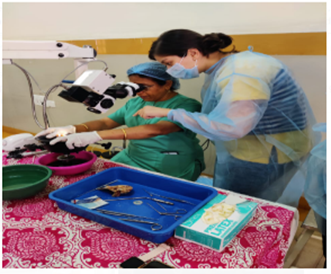
Demonstration of temporal bone dissection under microscope to the participant
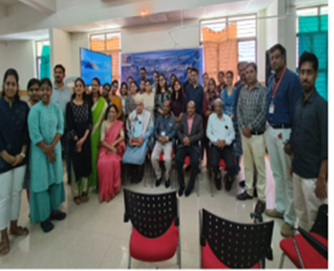
Participants of temporal bone dissection course with the resource faculty

Demonstration of temporal bone dissection
Context of the practice
Dysphagia, or difficulty swallowing, can result from various conditions, including head and neck cancers, cerebral vascular accidents, traumatic brain injuries, and cerebral palsy. A thorough evaluation of these causes is crucial for systematic management. To address this, a comprehensive inter-departmental multidisciplinary team was formed to evaluate and treat patients with dysphagia.
Objectives of Practice
- To evaluate the patients with various causes of dysphagia attending JSS Hospital
- To provide comprehensive care for patients with dysphagia through multidisciplinary team of experts
The Practice
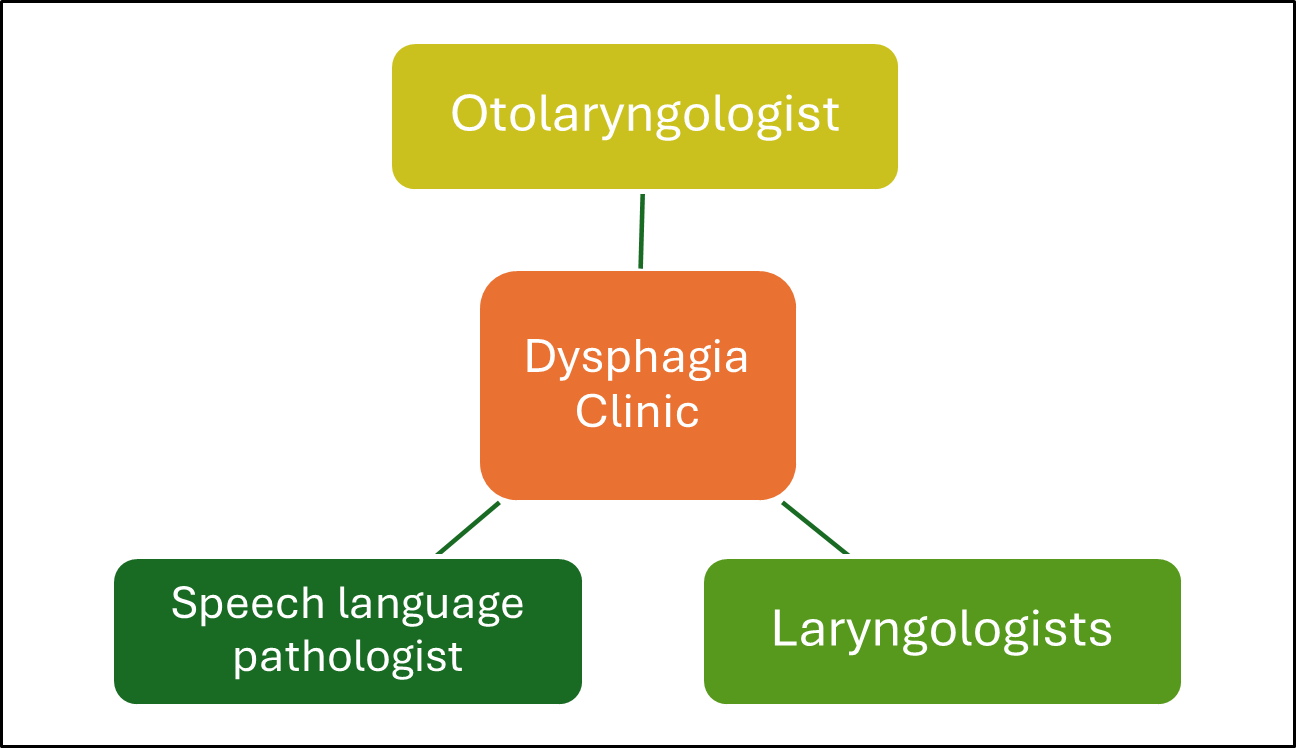
Multi-Disciplinary nature of Dysphagia Clinic
The dysphagia clinic, initiated in coordination with the JSS Institute of Speech and Hearing, comprises a team of otolaryngologists, laryngologists, and speech-language pathologists.
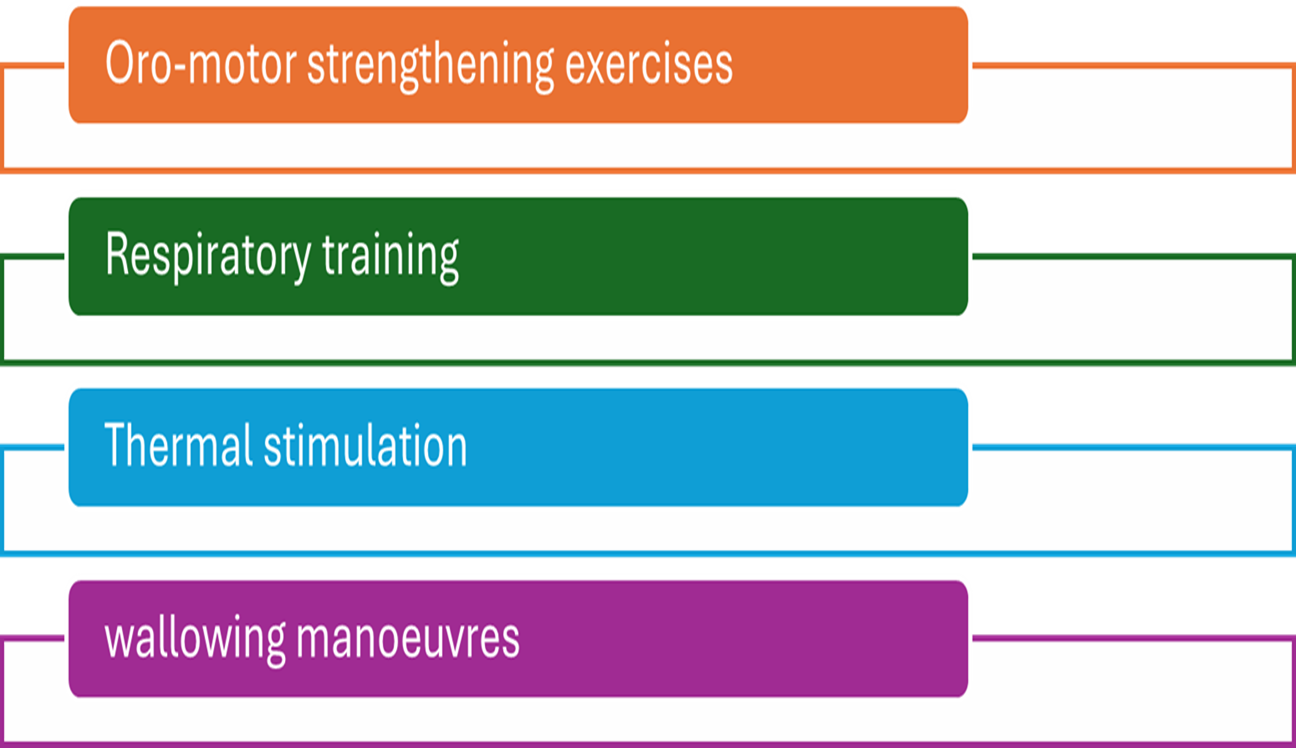
Services offered by the dysphagia clinic
Initially the patients undergo thorough ENT examinations and Fiberoptic Endoscopic Evaluation of Swallowing (FEES).
Obstacles faced and strategies adopted to overcome them
Obstacle
- Lack of Fiberoptic Endoscopic Evaluation of Swallowing (FEES) equipment
Strategies to overcome
- Establish a FEES station to facilitate comprehensive evaluation and treatment of dysphagia.
Impact of the Practice
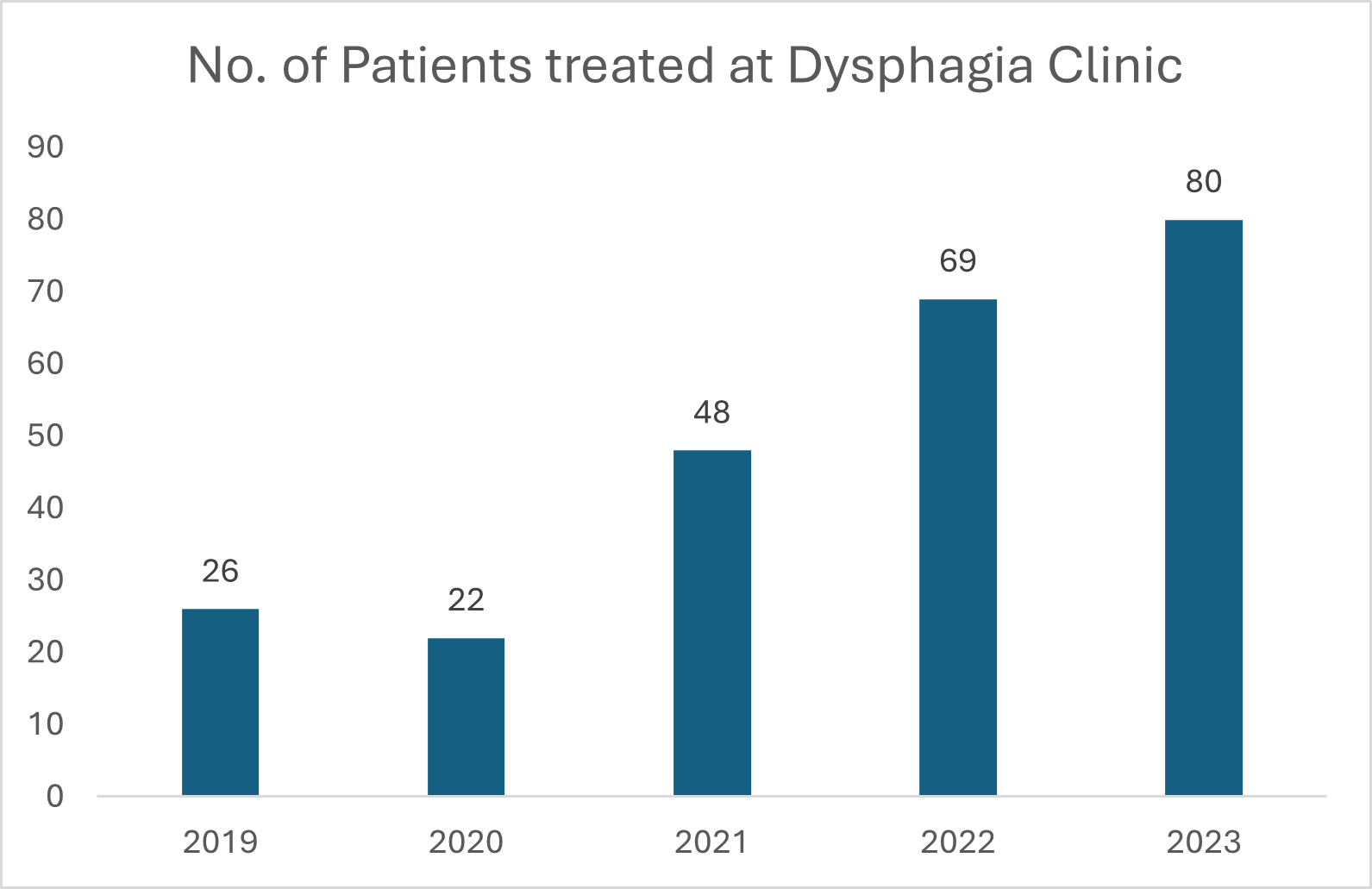
The clinic has benefited 250 patients from various departments, with referrals from other hospitals. The patients and their attendants have expressed the satisfaction with the multidisciplinary nature of treatment offered under one hospital setting for the swallowing disorders. Year on year there is also increase in the referral of cases from other hospitals to JSS Hospital for dysphagia related problems. Out of 149 patients who visited the hospital in last two year, 35% were referred from other hospital for the treatment at our centre.
Participants of temporal bone dissection course with the resource faculty
Resources required
- FEES equipment
- Oro-motor strengthening tools
- Respiratory training equipment
- Thermal stimulation devices
- Multidisciplinary team of specialists
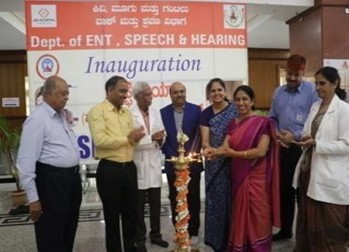
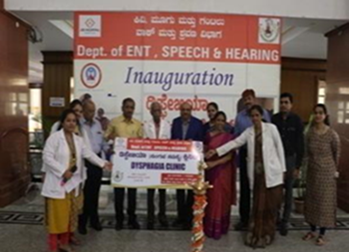
Inauguration of dysphagia clinic at JSS Hospital, Mysuru
Context of the practice
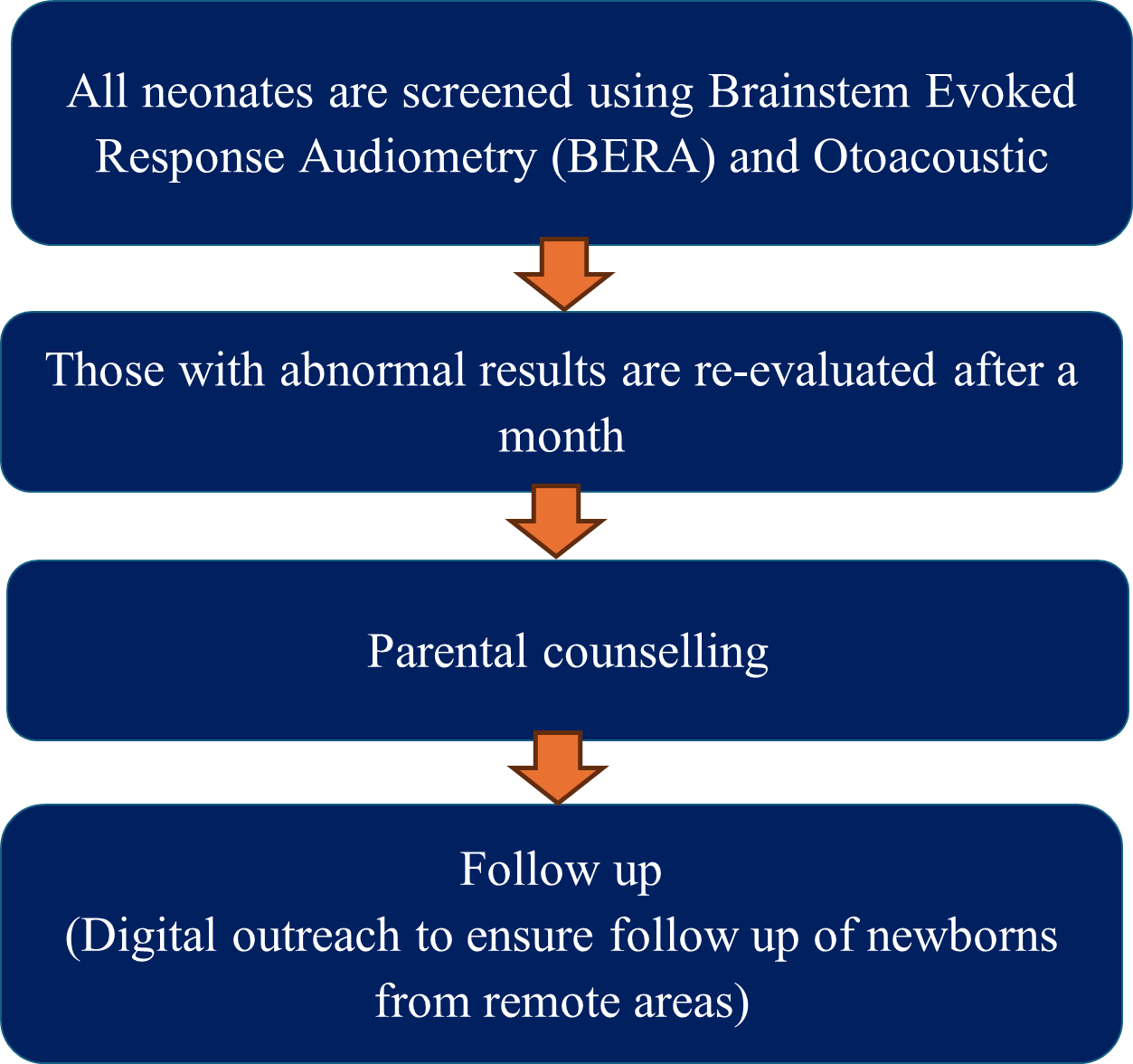
Early detection of hearing loss in newborns is crucial to prevent speech delays and other developmental issues. This also helps the proper cognitive development of newborns and promotes social and emotional development. Screening informs parents, enabling them to support their child's hearing and communication needs. This process enables the parents and families to be informed about the resources, such as audiology services, speech therapy, and support groups. In this context the Department of ENT, JSS Medical College and hospital initiated the comprehensive newborn hearing screening program with the aim to identify congenital deafness at birth so that early treatment can be initiated.
Objectives of Practice
- To detect congenital deafness at birth among neonates
- To initiate early treatment among neonates with congenital deafness
- To avoid the occurrence of speech delay in affected children to build their brighter future.
The Practice
Obstacles faced and strategies adopted to overcome them
Obstacle
- Follow-up of patients from remote areas
Strategies to overcome
- Implement parental counselling and digital outreach programs to track newborns' hearing screening and follow-up.
Impact of the Practice
The program has facilitated early detection and treatment of congenital deafness, streamlining affected children for early cochlear implantation and reducing speech delays. Out of 6500 newborns screened in the JSS Hospital 32 newborns were detected to have congenital hearing abnormalities among them, 28 children are under regular follow up. The parents and families are satisfied with the services provided in early detection of hearing abnormalities at JSS Hospital and support rendered for the management.
Resources required
- OAE machines
- Audiologists
- Digital outreach tools
Context of the practice
Cochlear implants are essential for children with severe to profound sensorineural hearing loss who struggle to interpret speech even with hearing aids. The clinic works to rehabilitate these children and integrate them into regular schooling.
Objectives of Practice
To evaluate and rehabilitate children with severe to profound sensorineural hearing loss through cochlear implantation.
The Practice
Initiated in 2017, the clinic is empanelled under central and state government schemes and other programs for needy children to undergo surgery free of cost. The clinic evaluates and prepares children for cochlear implantation, followed by post-implant therapy.
Obstacles faced and strategies adopted to overcome them
Obstacle
- Obtaining funds for implants for children not covered by government programs
Strategies to overcome
- Secure empanelment under government schemes and seek aid from NGOs.
Impact of the Practice
Ninety-two children have benefited from the program, with many attending regular schools after successful implantation and rehabilitation.
Resources required
- Government schemes (e.g., ADIP Scheme, SAST)
- Surgical team
- Rehabilitation centre for post-implant therapy
Context of the practice
Hearing evaluation typically requires specialized equipment and facilities, making it challenging to conduct screenings in community settings. The Shravana Mitra app addresses this by providing a mobile-based hearing screening tool.
Objectives of Practice
To facilitate initial hearing assessments in camps, for high-risk individuals, or in any healthcare setup using a mobile app.
The Practice
Released in December 2021, the Shravana Mitra app has the following features,
- Any user can test the hearing ability of both his/her left and right ear by using this app.
- Both air conduction (using normal headphone) and bone conduction (using specialized headphone) tests can be performed
- Friendly user interface with option of selecting language of choice, including Kannada, Hindi and other Indian languages.
- Results are stored and available for users and Doctors in data or plots over a period of time.
- livers accuracy similar to pure tone audiometry (PTA).
The Honourable Chief Minister of Karnataka launched it, and it has been used for screening in various community settings.
Obstacles faced and strategies adopted to overcome them
Obstacle
- Lack of internet connectivity in rural areas
Strategies to overcome
- Improve mobile network connectivity in rural areas and educate the public about the app's availability.
Impact of the Practice
The app has provided a convenient, accurate hearing screening tool accessible to a vast population, overcoming the limitations of traditional hearing evaluations.
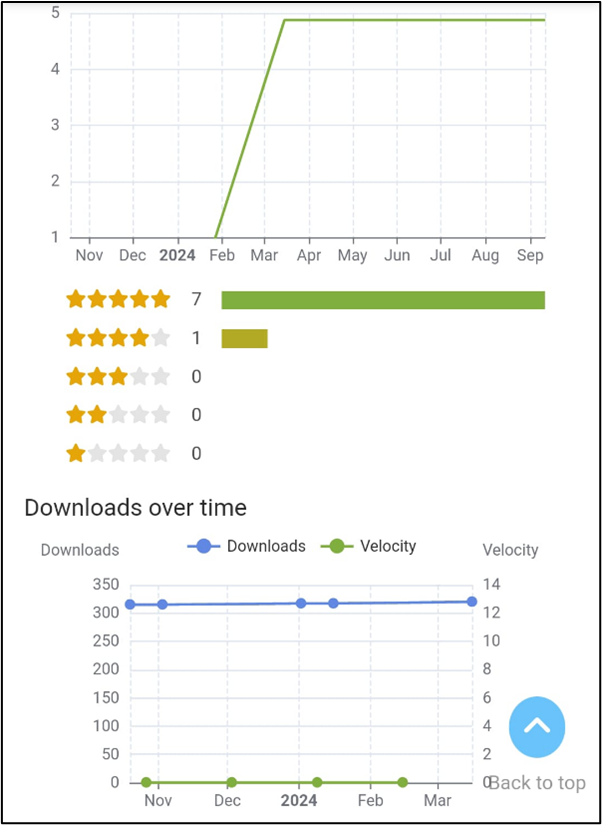
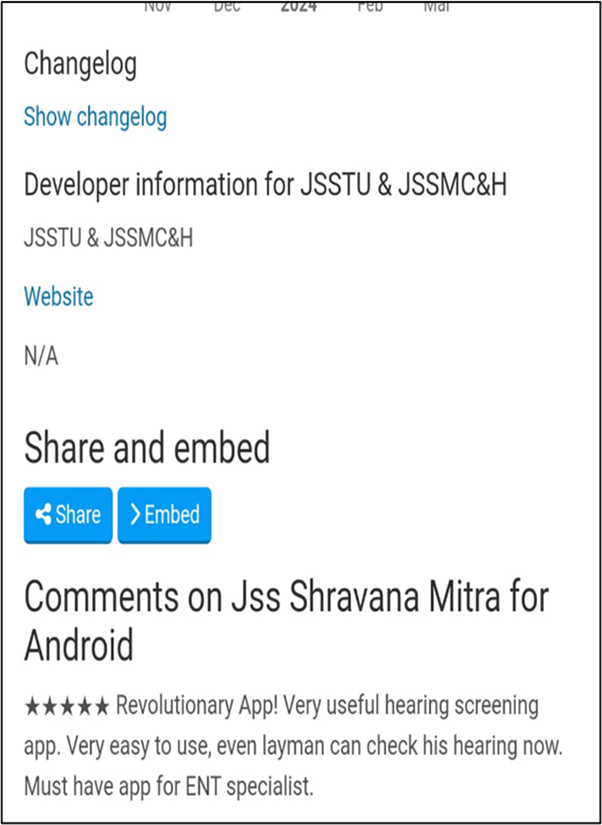
Downloads and feedbacks on the app
Resources required
- Development and validation teams
- Intellectual property management
- User data management
- Marketing and educational outreach