JSS Medical College
Symposium on ntroduction to Applied Health Research: Dissemination, Education, and Implementation
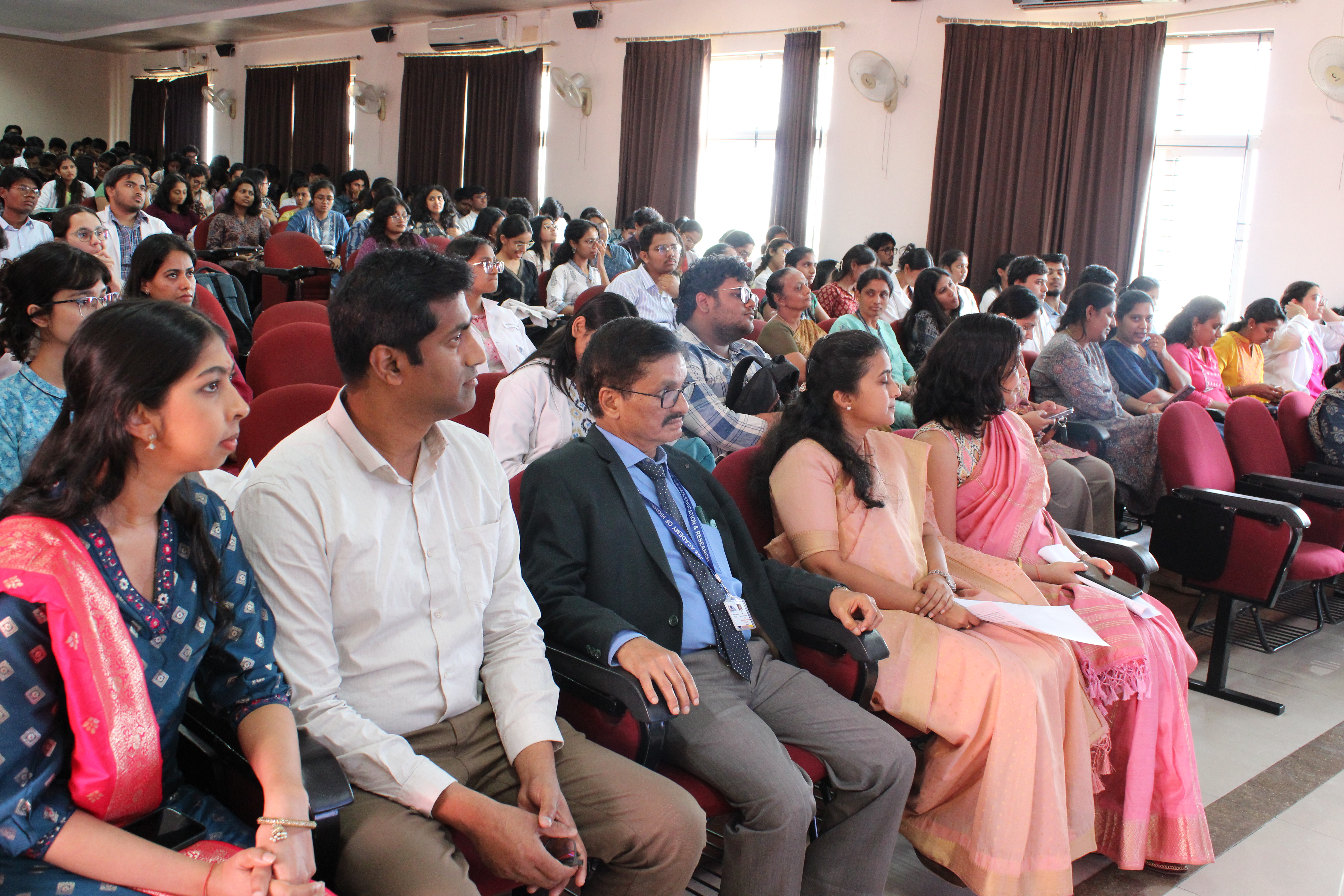
The Department of Community Medicine, JSS Medical College, under JSS Academy of Higher Education & Research, organized a symposium titled Introduction to Applied Health Research: Dissemination, Education, and Implementationon 10th March at Gallery 6, commencing at 3:00 PM with an inaugural session followed by scientific deliberations.
The symposium was conducted in collaboration with the DEVI Collaboration associated with the University of Birmingham, United Kingdom. The programme aimed to sensitise participants to the principles of applied health research, with a focus on translating research evidence into real-world healthcare practice through dissemination, education, and implementation science.
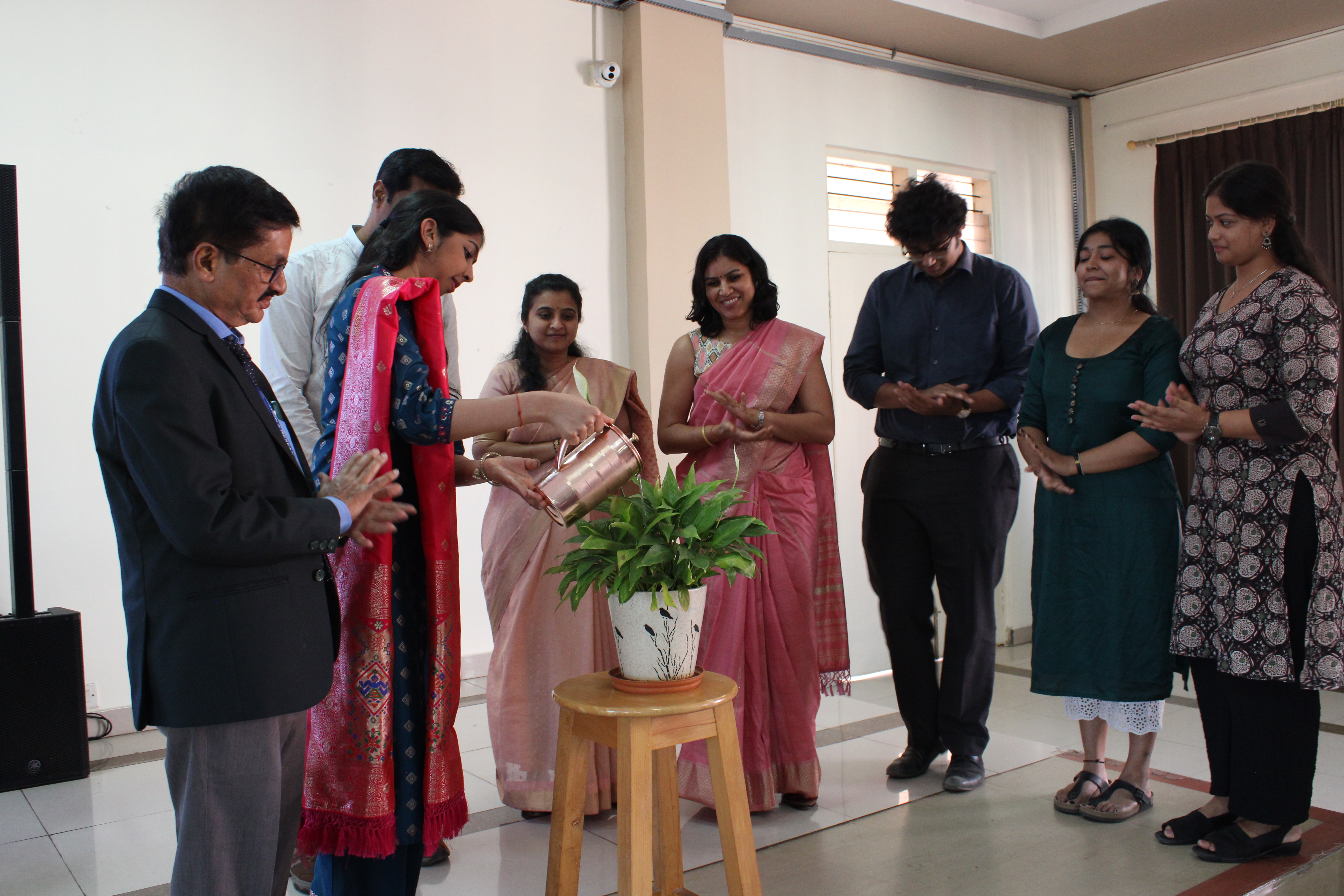
The inaugural session was graced by esteemed dignitaries including Dr. Punith Kempegowda (Associate Professor, Department of Applied Health Sciences, University of Birmingham, UK) as the Chief Guest; Dr. Narayanappa D (Principal, JSS Medical College); and Dr. Madhu B (Professor and Head, Department of Community Medicine). The session included a welcome address, overview of the symposium, and ceremonial watering of the plant symbolizing growth and knowledge
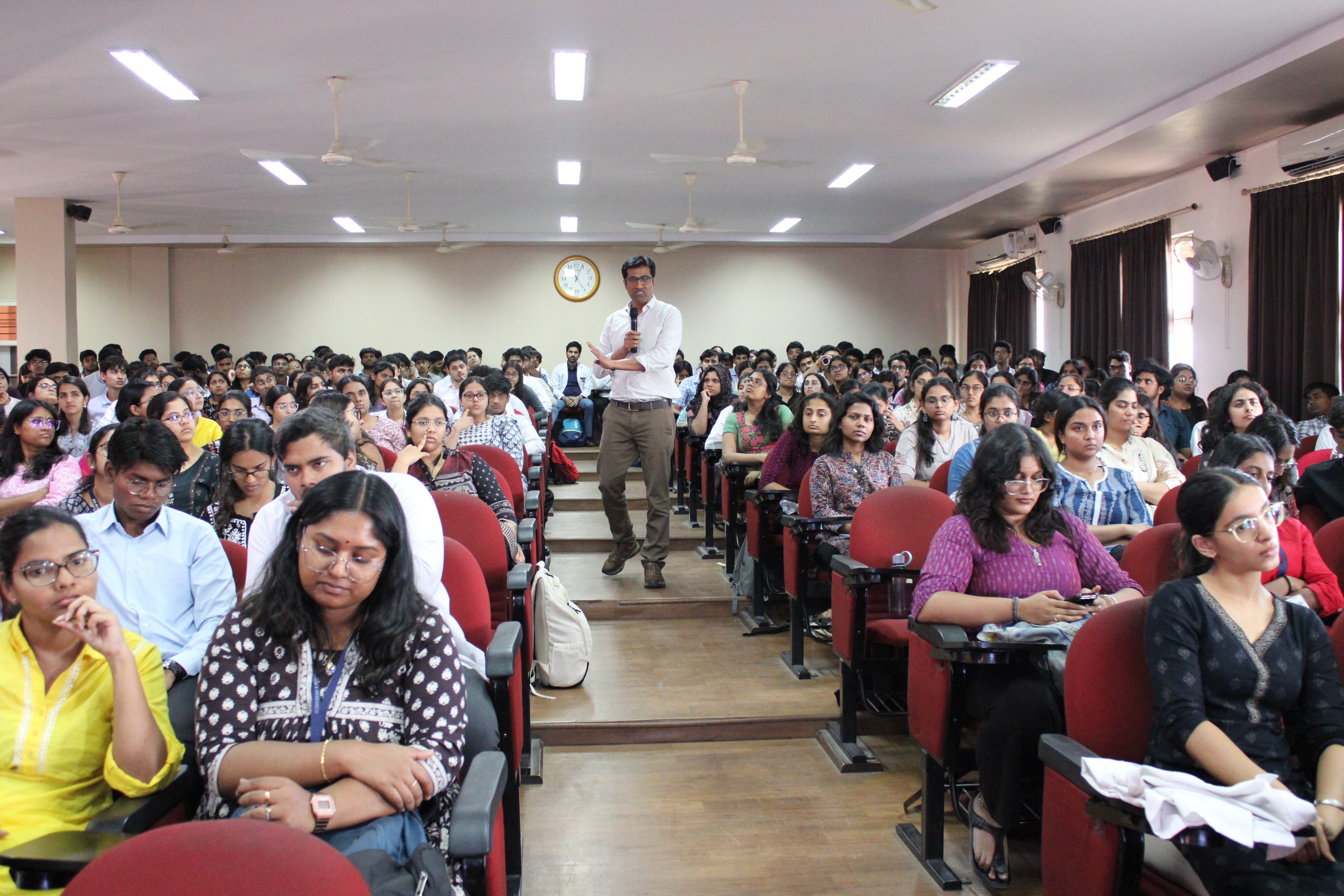
The scientific sessions covered key domains of applied health research. Topics included dissemination and knowledge mobilisation strategies, innovative educational models such as SIMBA, and core concepts of implementation science. Applied sessions further demonstrated real-world examples, including the use of CoMICs for health communication and the DEKODE initiative as a model for implementation in practice. Dr. Kalyani Prasad, DEKODE International Project Coordinator, contributed to the scientific deliberations with an applied perspective.
A total of 95 participants across all MBBS phases registered for the symposium, in addition to active participation from Phase 3 Part 1 MBBS students, reflecting strong academic interest and engagement among undergraduate and postgraduate learners.
The symposium provided a valuable platform for students and faculty to understand the practical application of research, explore opportunities for collaboration, and engage in innovative learning approaches including simulation-based models. It also marked an important step towards strengthening academic collaboration and research capacity building at the institutional level.
The programme concluded with a vote of thanks, acknowledging the contributions of all dignitaries, speakers, participants, and organizing team members.